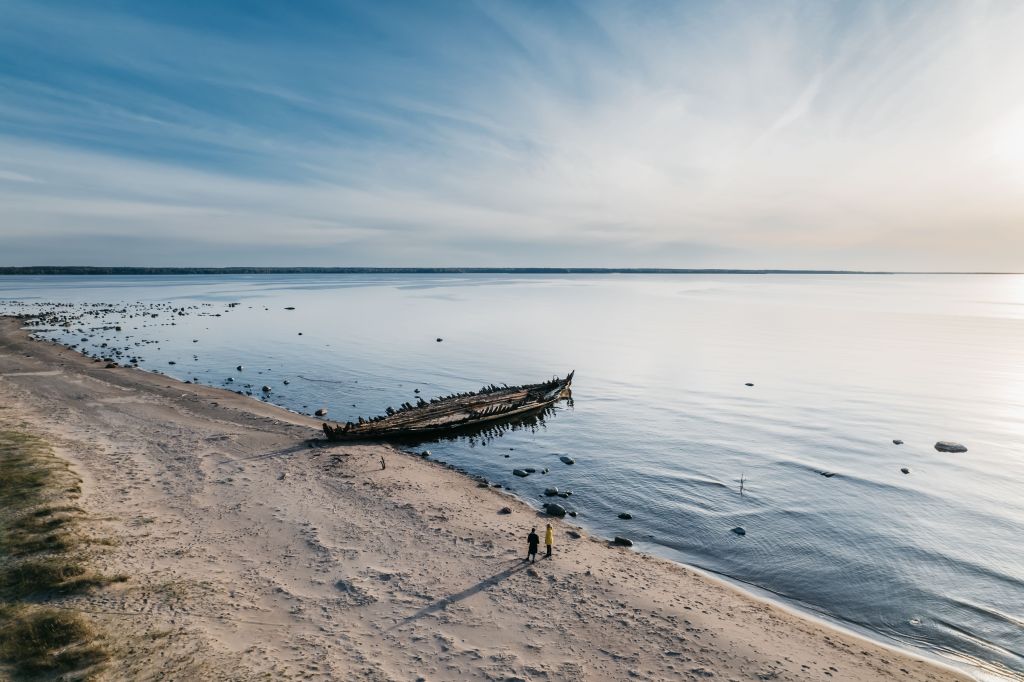
At the northern border of Loksa town rests the wreck of the fork schooner “Raketa.” This ship was constructed in Rauma city at the Filip Walter Hollming shipyard (F. W. Hollming Oy Ab) and bears the serial number 19. Raketa was one of the many war reparations schooners that Finland built in the post-war years to compensate the Soviet Union for war damages. The schooners were constructed according to the requirements of the Soviet Union’s maritime registry and were repaired in Loksa, where they were also stored during the winter. “Raketa” operated as a cargo ship in the Estonian State Shipping company. Due to inexperienced handling, it quickly became worn out. In 1957, it was decommissioned and beached on the eastern shore of Hara Bay, just below Loksa town. North of Raketa in the same bay, there are other shipwrecks, and one of them may be named Tšaika. The wreck of Raketa symbolizes a part of the history of wooden ships and motor sailboats.
Near us is the northernmost winery in Estonia – Valgejõe Veinivilla. Valgejõe Veinivilla is the oldest official berry winery, established in 2014. The wines are crafted by mother Tiina and son Gregor, both of whom are sommeliers and are always ready to passionately talk about their wines. Visitors who drop by unannounced can purchase wine to take home, and if the hosts have more time, wine tasting is also an option. One can reach Veinivilla by canoe along the Valgejõgi river, and the winery offers various activities for groups. These include farm-to-table gourmet experiences paired with wines, wine orienteering, tastings in the Lahemaa forest, and more.


Loksa is the northernmost town in Estonia. The town originated on the lands of Loksa village and was granted town rights on August 25, 1993. The shallow and sandy Loksa beach is located along the shores of Hara Bay, near Lahemaa National Park. It is a wild beach, offering a pleasant opportunity to enjoy a more private and peaceful retreat. In between the dunes, one can seek shelter during windier weather, and during hot times, there is shade provided by the trees. The town is traversed by the Valgejõgi river. Catering and shops are situated in the heart of Loksa, approximately 0.5 km away from the beach.
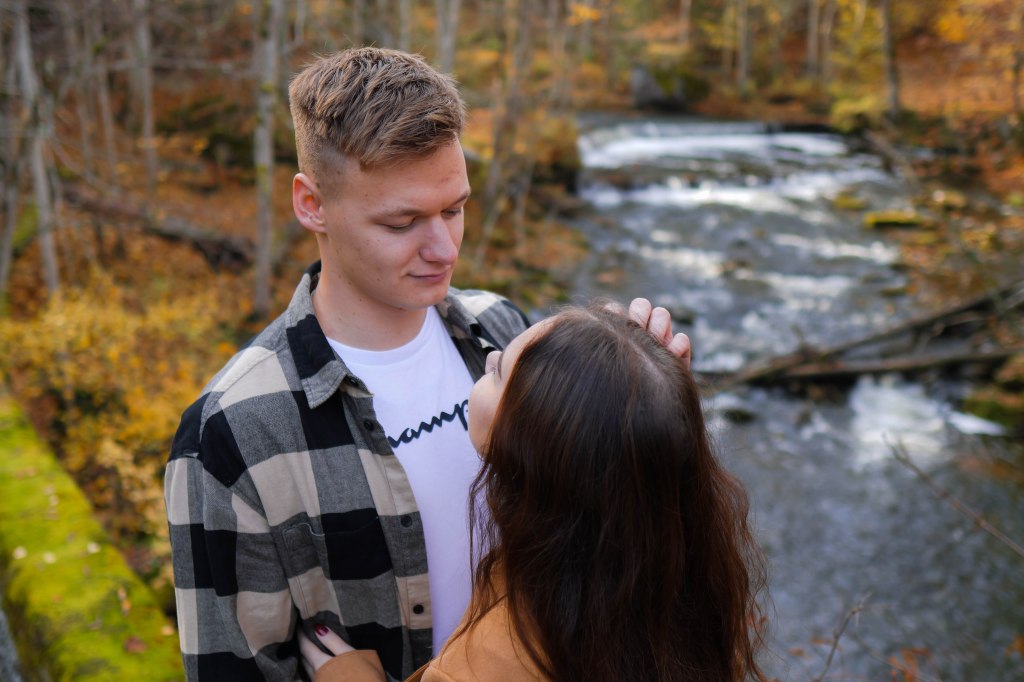
Nõmmeveski Waterfall is the most voluminous waterfall in Lahemaa, standing at 1.2 meters tall with cascades. Nõmmeveski Waterfall is located on the Valgejõgi River. In the canyon valley’s broad-leaved forest, there is an abundance of protected wood cuckoo-flower, and in the area, you can find a giant boulder that was placed under protection in 1939. The almost 470 meters long canyon formed as a result of the waterfall provides beautiful views, adding a sense of primordiality and drama to the foaming water. Also of interest is the former hydroelectric power station (182 kW) above Kõnnu Manor’s watermill in the canyon, which supplied electricity to the former Joaveski wood pulp mill. Unfortunately, it was destroyed in a fire on November 8, 1964.
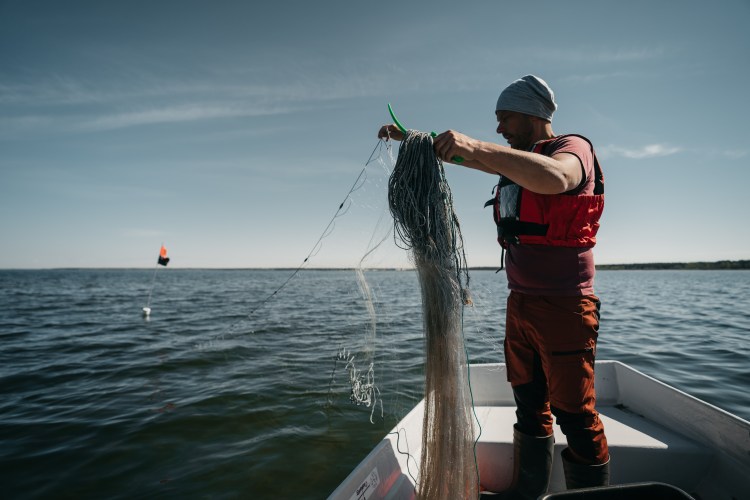
Historically, fishing has been the main source of livelihood and income in Lahemaa. The sad times when the fish stocks of our waters were few is passing. Coastal fishing cannot exist without fish. The traditional way of fishing is extremely labor-intensive and difficult, and the use of conventional fishing gear is sometimes restricted by legislation. The profession of fisherman attracts men who are “fishermen” by heart. As the spring fishing season approaches, they start behaving strangely, doing things and doing all kinds of pranks. From the second half of March, it is impossible to reach them by phone. We pass on this tradition in Kakupesa today to all those interested.
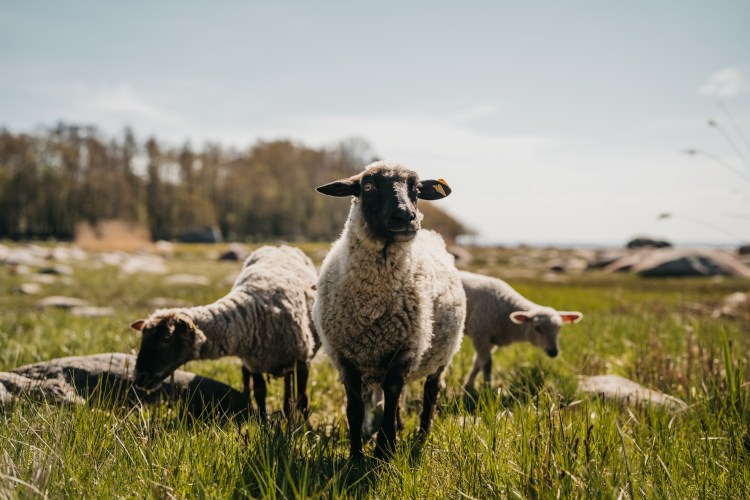
MTÜ Tammistu lammas is a breeder of sheep and sheepdogs in the village of Tammistu on the Juminda peninsula in Lahemaa. Sheep maintain the beach meadows of the peninsula, and dogs help herd and protect the sheep.
During a visit to the farm, you will gain new knowledge about sheep and herding dogs: how sheep dogs work and you can also try the job of a dog handler yourself. What is the life of a sheep really like? Of course, you can pet both dogs and sheep. In addition, it is possible to order a guided tour along the beach with local folklore stories.
The root vegetables offered in Kakupesa grow with the support of the mild manure of the Tammistu sheep.
Discover more
Follow us
Get in touch
Our business
Snuuk OÜ, reg 16293820
IBAN: EE427700771006492491 LHV

 Kakupesa puhkemajad